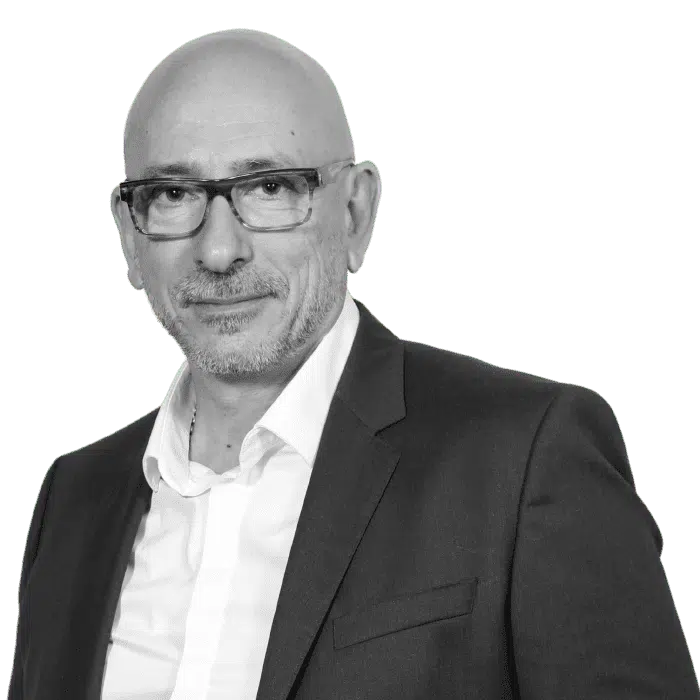
A former head of medical information and hospital CIO, Dr Arnaud Hansske becomes Softway Medical’s first Chief Medical Officer. His role is to bring the voice of healthcare professionals into the group’s strategic and product decisions.
As a junior doctor in hospitals that were already short of resources, I learnt that a medical decision depends on the information available to the doctor at the moment it is made. It was to improve that information that I trained in computer science and biostatistics.
As a CIO, I led three changes of electronic patient record and selected Softway Medical through a tender. I saw the gap between the features a software vendor imagines and the real work of a hospital department. In joining the Softway Medical group, I have come to narrow that gap.
My role sits within the Strategy, Data and Innovation division, reporting to the Deputy CEO. I bring the product teams what I know of patient care, along with two questions to ask of every project: who is this tool designed for? Under what conditions will a doctor trust it?
By placing me alongside its executive leadership, Softway Medical is making a choice: to support healthcare organisations and local health systems over the long term, beyond supplying software.
A patient does not live in a piece of software. They move from community care to hospital, from the laboratory to imaging. Their information must follow them, which means our tools must exchange data on open standards such as FHIR. It also passes through very different hands, those of the medical secretary preparing the appointment or the nurse administering treatment. Understanding these roles matters as much as mastering the technology.
A health software vendor must also hold itself to a code of ethics. Medicine has one, founded on beneficence, non-maleficence, justice and transparency. I want to bring it into our product decisions.
This demand applies first to artificial intelligence. Softway Medical is already trialling a generative AI summary of the patient record in several hospitals. In geriatrics, a patient arrives with more than a hundred pages of records spread across several admissions. Piecing them together can take a junior doctor or a registrar half an hour. The tool brings up past medical history and current medication in a few seconds. It also retrieves information buried in the record that can change how the patient is managed. The summaries it produces are very close to those written by the doctors themselves and, when the tool performed less well, clinicians reported it.
A summary can be well written and still leave out an anticoagulant. In a patient record, “non-smoker” and the absence of any mention of tobacco are two different pieces of information. The tool must therefore be evaluated by doctors on representative clinical cases, measuring its fidelity to the record and the severity of its omissions. Every piece of information it produces must point back to the source document and its date, and it must be able to state when data is missing.
I remain cautious about AI that proposes a diagnosis or treatment on its own. A fluent answer is not proof of a correct one, and the decision remains with the doctor.
Many hospitals have neither a data team nor a budget for experimentation. AI must not widen the gap between them and the teaching hospitals. It falls to the software vendor to build proven features into the software their clinical staff already use.
For a long time we designed information systems for professionals and managers, and not enough for patients. Patients must know what AI is doing in their care and take part in designing the tools that concern them. A patient remains a person, with their own history, preferences, emotions and autonomy.
AI will certainly save us time. What we do with that time is ours to decide, together.
Arnaud HANSSKE